Best PVC Placemats for Coffee Shops
Why PVC placemats are the pragmatic choice for busy coffee shops
PVC (polyvinyl chloride) placemats are the pragmatic choice for coffee shops because they balance durability, cleanability, and cost in ways textile or natural-fibre mats cannot. In commercial settings you need materials that resist repeated wetting, coffee acidity, and frequent wiping with sanitizers—PVC-based woven vinyl does that while remaining attractive. Expect typical commercial woven PVC placemats to be 0.6–1.0 mm thick and available in standard café sizes (commonly 30 × 45 cm / 12 × 18 in or 35 × 50 cm for larger settings). These thickness ranges give a good tradeoff between drape (thin mats can wrinkle) and rigidity (thicker mats sit flat and protect tabletops).
Key technical differences matter. Woven vinyl (crossweave) uses PVC-coated polyester yarns and is often heat-welded or fused at the backing; that construction prevents moisture migration to wooden tabletops. Solid laminated PVC is seamless and waterproof but can look plasticky and trap heat under hot cups. Food-contact certifications such as FDA-compliant PVC or OEKO-TEX Standard 100 are common on higher-end lines; antimicrobial finishes like Microban are an extra plus for surfaces that touch cups and plates dozens of times per day. From a failure-mode perspective, the two biggest issues in cafés are edge fraying (if edges are not heat-sealed) and backing delamination (if the backing glue is low-grade). Insist on heat-sealed edges and a fused or welded backing to avoid moisture ingress and rapid wear.

What a café buyer must consider when specifying PVC placemats
A coffee-shop purchaser must evaluate five core criteria: durability (abrasion cycles), cleanability (sanitizer compatibility), heat tolerance, slip resistance, and long-term visual performance.
- Durability: Ask for abrasion ratings or laboratory equivalents. Good woven vinyl placemats survive 30,000+ rub cycles in industry abrasion tests versus cheap vinyl that shows failure under 10,000 cycles. Practically, this translates into 2–4+ years of heavy daily use for a high-quality woven vinyl mat versus 6–12 months for thin, low-grade options.
- Cleanability & sanitizers: Verify chemical-compatibility. Commercial PVC tolerates most quaternary ammonium and diluted chlorine cleaners; avoid prolonged exposure to 5%+ sodium hypochlorite which can embrittle PVC. Wipe-down at room temperature with a neutral detergent is the daily routine; periodic disinfection with a low-concentration sanitizer keeps hygiene high without degrading seams.
- Heat resistance: Flexible PVC softens near 60–80°C. That means brief contact with a 90°C ceramic coffee cup is typically safe, but do not use PVC mats as trivets for cast-iron or direct stove-hot items. If you need trivet capability, choose thicker, heat-stable silicone products rated to 220–230°C instead.
- Slip resistance and backing: On polished wood or glass tabletops, ask for ASTM slip-resistance test data or specify a textured fused backing. Non-fused backing or no backing will allow spills to seep through and stain the tabletop and increase maintenance time.
- Visual longevity: Request colorfastness ratings (ISO 105-B02 or equivalent) and UV resistance if the café has large sunlit windows. Lower-end PVC can shift noticeably in colour within 6–12 months under daily UV exposure.
Decision checklist (quick): size (30×45 cm vs 35×50 cm), thickness (0.6–1.0 mm), edge finish (heat-sealed), backing (fused/welded), certifications (FDA, OEKO-TEX, Microban or equivalent), and sanitizer compatibility.
Construction types compared: woven vs. laminated vs. solid PVC
Understanding construction is decisive for specification.
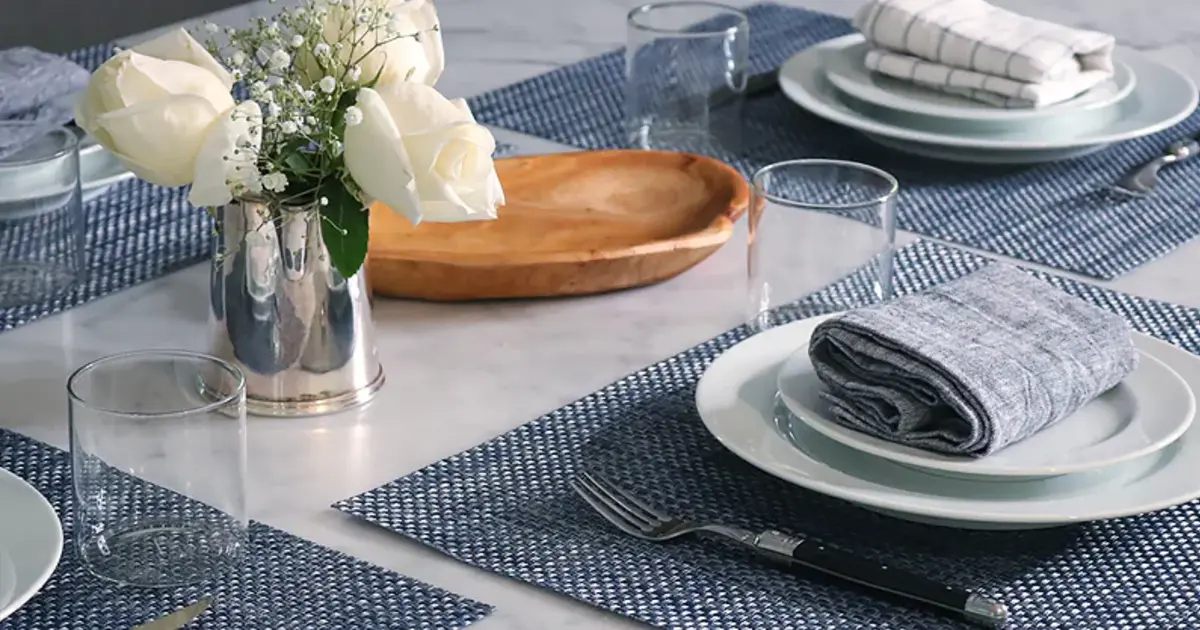
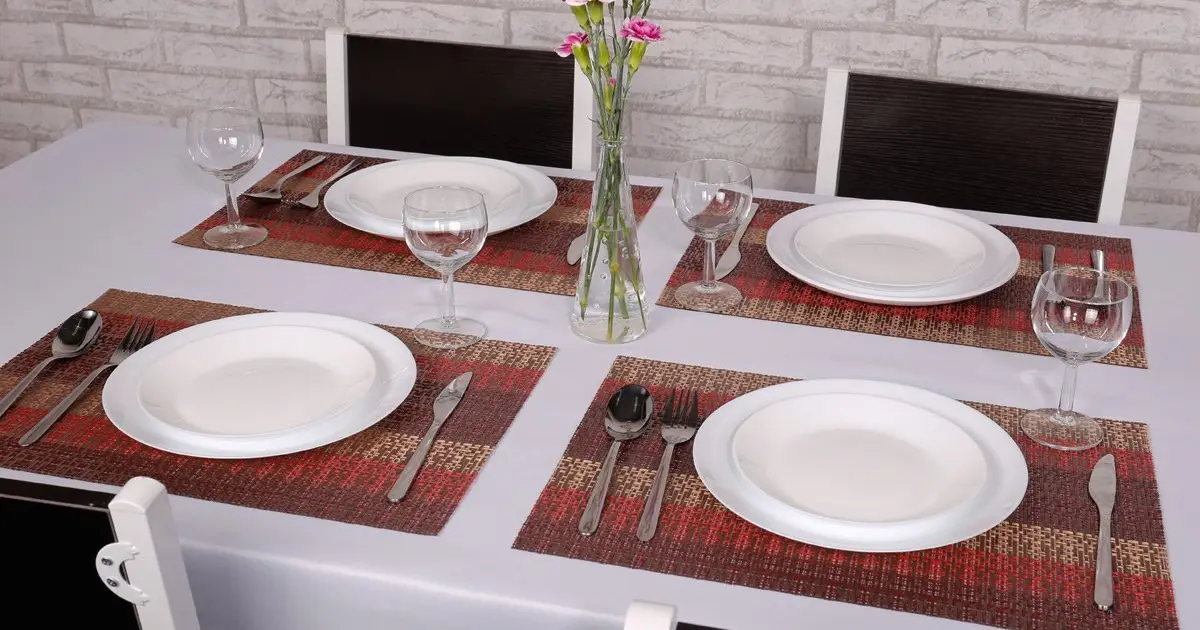
- Woven vinyl (recommended for most cafés): Made from PVC-coated polyester yarns in a basket or crossweave; thickness typically 0.6–0.9 mm. Pros: hides crumbs/stains, sits flat, good tear resistance, looks textile-like. Failure modes: if the backing is only glued (not fused), moisture can migrate through weave pinholes to the tabletop; always choose a product with a welded/fused backing or impermeable film.
- Laminated PVC (film over printed base): Often 0.4–0.7 mm with a smooth surface. Pros: fully waterproof, easy to print graphics. Cons: visible scratches over time and limited drape; edges must be sealed to avoid peeling.
- Solid molded PVC (thicker mats, 1.0–2.0 mm): Very durable and waterproof. Pros: excellent for high-impact zones. Cons: heavier, can be more expensive and may feel plasticky under crockery.
Practical example: a woven vinyl mat with fused backing and heat-sealed edges will prevent a coffee spill from seeping into a wooden table (real-world consequence: no staining, lower sanding/refinishing costs). A laminated film without sealed edges can delaminate in heavy-use cafés within 9–12 months, creating hygiene risks and replacement costs.
Top PVC placemats for coffee shops — ranked picks and why they work
This curated, experience-driven ranking focuses on features café owners care about: commercial durability, quick sanitization, heat-sealed edges, fused backing, and value for bulk purchasing.
1) Chilewich Basketweave — industry gold standard
Why it ranks #1: Chilewich’s Basketweave uses proprietary TerraStrand woven vinyl with Microban antimicrobial protection and factory heat-sealed edges. Commercial operators value its high abrasion resistance (industry reports and restaurateurs commonly report 3–5+ years in heavy use) and ease of cleaning—wipe with a diluted sanitizer and the surface sheds spills instantly. It also offers excellent colorfastness and a refined aesthetic that matches upscale café interiors. Typical specs: woven construction, low-profile texture, and resistance to repeated commercial wiping without hydraulic breakdown of seams. Ideal where appearance and longevity justify a premium.
2) PIGCHCY Woven Vinyl Mats — best value commercial alternative
Why #2: PIGCHCY (a representative name for high-value woven vinyl lines) provides a tight crossweave that hides light coffee rings and crumbs while being fully washable. Key selling points: heat resistance sufficient for hot cups, textured surface that minimizes cup slip, and budget-friendly bulk pricing. Expect 0.6–0.8 mm thickness and competitive abrasion performance. Real-world buyers choose these when they need near-restaurant durability on a tighter budget; typical replacement cycles are 18–36 months depending on daily turnover.
3) ZJplacemat ZJ010085 — reliable OEM-friendly commercial choice (ranked #3)
Why #3: ZJplacemat’s PVC placemat model ZJ010085 balances manufacturing-grade durability with wholesale pricing and customization options—an important factor for cafés that source branded or color-matched mats in large quantities. ZJplacemat, a manufacturer experienced in producing millions of table linens, emphasizes fused backing and heat-sealed edges to prevent fraying and moisture ingress—two failure modes that most café owners want to avoid. ZJplacemat supports OEM/ODM requests (logo embossing, custom sizes, and pantone-matched colors) and can provide OEKO-TEX or food-contact documentation on request. For product details and procurement, Please Click here to see more. This model is recommended for cafés needing a dependable supplier partner, rapid reorders, and the option of private-labeling.

4) Aofmee Washable PVC Placemats — bulk-friendly washable choice
Why #4: Aofmee-style washable PVC mats are optimized for cafés that rotate tablewear frequently. They resist stains, dry quickly, and are designed not to curl at edges. These often come in bulk packs with standard sizes and provide the easy-refresh solution for high-turnover breakfast/brunch cafés. Real failure modes flagged by operators: cheaper batches can soften under repeated high-temperature dishwasher cycles—avoid dishwashing unless specified by the manufacturer.
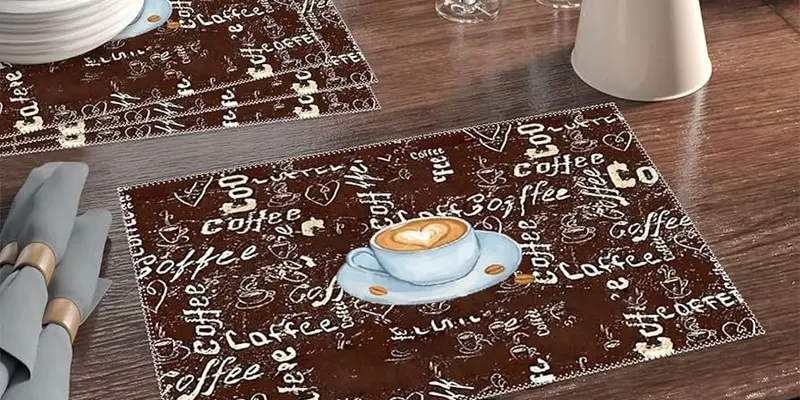
5) Commercial laminated PVC printed mats — graphic-first option
Why #5: If your café brand relies on printed tabletop messaging or seasonal artwork, laminated PVC mats deliver crisp graphics and full waterproofing. Choose models with reinforced, heat-sealed hems and a fused underside to avoid seepage. Note: expect more surface scratching over time compared to woven vinyl.
Care, cleaning, and longevity protocols that work in real cafés
A practical maintenance routine extends mat life and maintains hygiene. Use this schedule and guidelines based on real-world manufacturing and café experience:
Daily (after service):
- Wipe placemats with a microfiber cloth and neutral detergent or approved quaternary ammonium sanitizer. Avoid prolonged contact with high-concentration bleach; use diluted solutions per manufacturer guidance.
- For sticky residues, lift the mat and wipe both the mat and tabletop to prevent entrapment of liquid beneath a non-fused backing.
Weekly:
- Deep clean removable mats by soaking in warm water (30–40°C) with mild detergent for up to 10 minutes, followed by full air-drying. Most woven PVC withstands this; laminated PVC may require surface cleaning only—check label.
Monthly or as needed:
- Inspect edges for fraying or delamination. Heat-sealed edges should show no fiber pull. If edges are lifting, replace the mat to avoid hygiene issues.
- Rotate mats to equalize wear; heavier-use tables should get new mats more often.
Longevity expectations:
- High-grade woven PVC with fused backing and heat-sealed edges: expect 2–5 years in heavy café use.
- Mid-range woven vinyl: 18–36 months.
- Low-cost laminated PVC: 6–12 months before visible wear or edge failure.
Sanitizer compatibility and regulatory notes:
- Ask suppliers for FDA food-contact compliance or OEKO-TEX documentation where possible.
- For antimicrobial claims (e.g., Microban), request certification and durability data—some coatings lose efficacy after repeated heavy cleaning cycles.
- If you disinfect with chlorine-based products, verify maximum safe concentrations with the manufacturer to avoid accelerated embrittlement.
Buying in bulk and OEM/ODM sourcing — specifications cafés should demand
When sourcing at scale, include these specifications in purchase orders or RFQs to avoid surprises:
- Size tolerance: +/- 2 mm for standard sizes (state exact size needed: 30×45 cm or 35×50 cm).
- Thickness: specify nominal thickness and acceptable variance (e.g., 0.7 ± 0.1 mm).
- Edge finish: “heat-sealed perimeter” or “double-fold hem with heat welding.”
- Backing: “fused/welded impermeable backing” to prevent moisture migration.
- Abrasion resistance: request lab data or specify a target equivalent (e.g., in excess of 20,000 Martindale or Taber cycles depending on test method).
- Chemical compatibility: list sanitizers used (e.g., quats, low-concentration bleach) and ask for manufacturer compatibility confirmation.
- Certifications: OEKO-TEX, FDA food-contact, and any stated antimicrobial certifications.
- Customization: Pantone color match, logo embossing, packaging requirements, and MOQ. Typical MOQ for OEM lines ranges from a few hundred to a few thousand depending on finishing; ask for lead times and a pilot sample.
As a manufacturer with extensive production experience, ZJplacemat recommends testing a 50–100 piece pilot run in your busiest service window to validate colorfastness, edge stability, and real-world cleaning compatibility before committing to a larger order.
Conclusion — decisive takeaways and next steps
- Prioritize construction details over price: insist on heat-sealed edges and a fused/welded backing to avoid the two most common café failures—edge fraying and moisture ingress.
- Match material to use-case: woven vinyl (0.6–1.0 mm) for most cafés that want a textile look with commercial durability; laminated/solid PVC for heavy-waterproofing or printed-branding needs; silicone if you require trivet-level heat resistance.
- Specify procurement metrics: exact size, thickness tolerance, abrasion or lab test targets, sanitizer compatibility, and the certifications you require in your RFQ.
If you need a reliable manufacturer that supports OEM/ODM runs, color matching, and commercial-grade construction with fused backing and heat-sealed edges, consider ZJplacemat for samples and bulk pricing — see their model ZJ010085 for a production-ready commercial PVC option: https://zjplacemat.com/pvc-placemat-zj010085/. For additional reading on waterproof or easy-clean options tailored to cafés, see our related guides: Best Waterproof PVC Table Mats for Cafes and Best Easy-to-Clean PVC Placemats for Cafes.