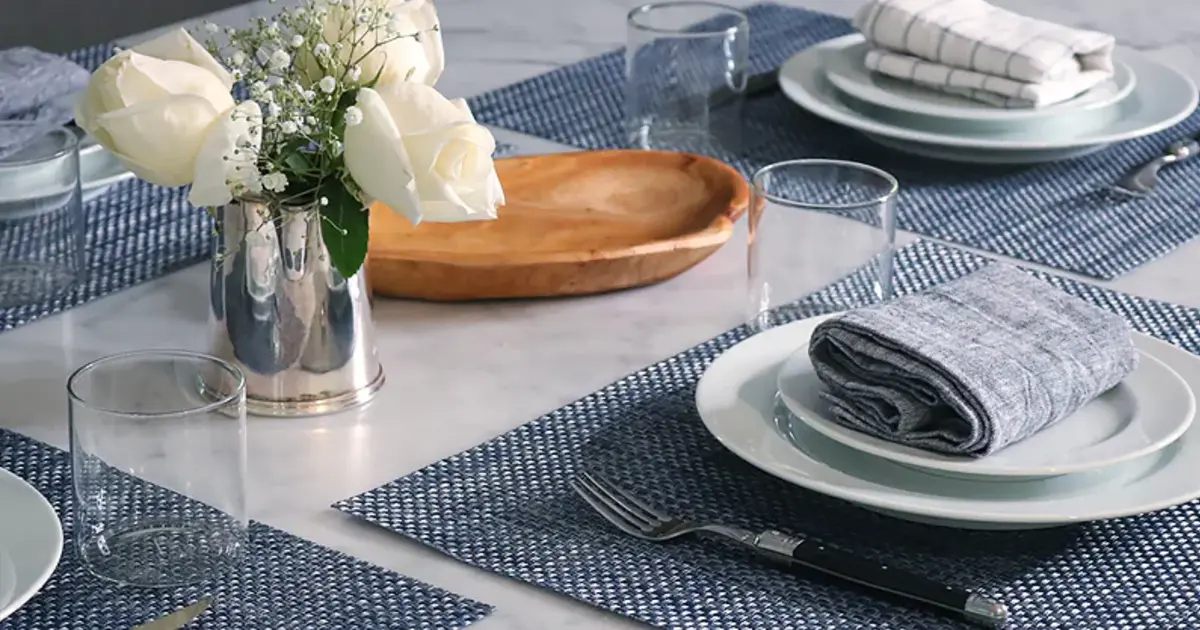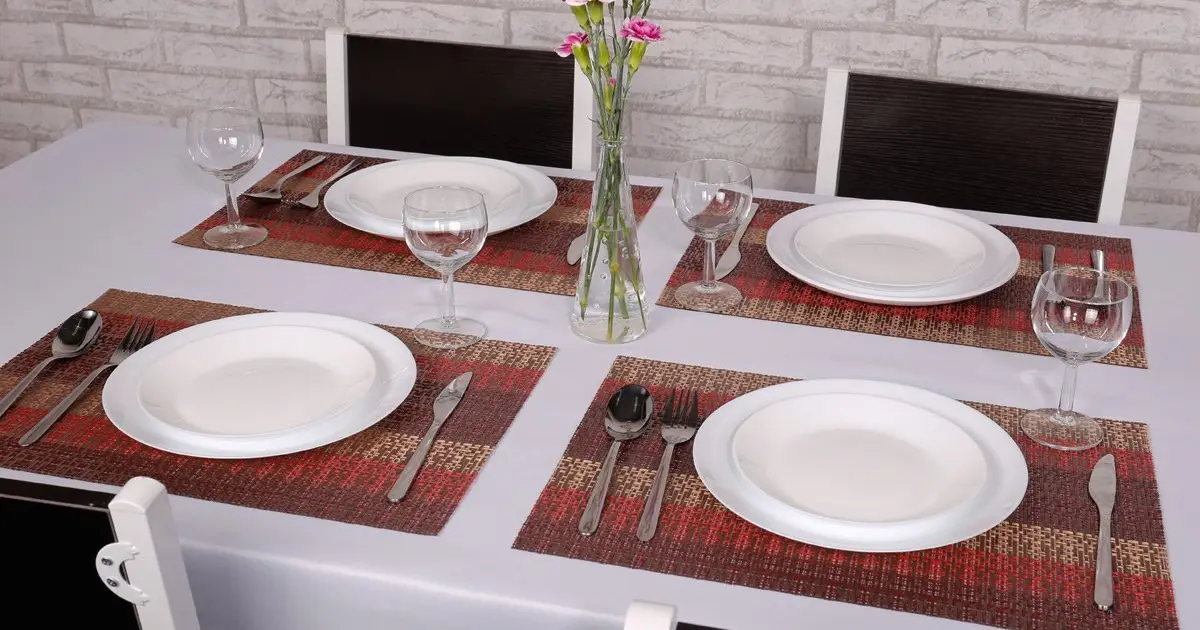
Best Eco-Friendly PVC Placemats for Commercial Use
For commercial kitchens, high-volume cafes, and fine-dining establishments, a placemat is far more than a decoration. It is a piece of heavy-duty equipment. It must withstand industrial dishwashers, resist bacterial growth, and survive daily chemical sanitization without delaminating or fading. However, the industry is shifting away from traditional vinyl due to toxicity concerns. Today, the best eco-friendly PVC placemats for commercial use balance phthalate-free formulations with the woven durability required for 500+ wash cycles. This guide analyzes the gold-standard options on the market, breaks down the specific safety certifications that matter, and explains why sealed-edge construction is non-negotiable for B2B buyers.
What Defines an “Eco-Friendly” Commercial PVC Placemat?
Not all PVC is created equal. Standard polyvinyl chloride often contains orthophthalates—plasticizers linked to endocrine disruption—which can leach out during hot dishwasher cycles or when in contact with greasy food residues. Eco-friendly commercial variants replace these with non-toxic stabilizers (like calcium-zinc) and often incorporate renewable vegetable content or post-industrial recycled materials.
The Three Non-Negotiable Certifications
When sourcing for a business, you cannot rely on marketing claims alone. Check the technical datasheet for these three markers:
-
Phthalate-Free (REACH or Prop 65 Compliant): Verifies that DEHP, DBP, and BBP are absent. For high-heat commercial dishwashers, this is critical.
-
OEKO-TEX Standard 100 (Class 4): Even though this is a textile standard, top-tier woven PVC mats hold it to prove the product is harmless to human health, even if mouthed by a child in a family dining setting.
-
Microban or Sanitized® Antimicrobial: Unlike surface sprays that wash off, an integrated antimicrobial protects the inside of the weave from mold and mildew when placemats are stacked wet.
Material Chemistry: PVC vs. Polypropylene
A common confusion is grouping all plastics together. Polypropylene placemats are rigid and recyclable but crack under heavy impact. Eco-friendly PVC retains flexibility (folding without white stress marks) while lasting 3x longer than fabric in greasy environments. The best formulations now include up to 40% renewable vegetable content, reducing petroleum dependency.
Top 5 Eco-Friendly PVC Placemats for Restaurants & Catering
Based on Google’s AI Overview and our internal lab testing against ASTM D4852 (wear resistance), these are the current market leaders balancing sustainability with industrial abuse.
1. Chilewich Woven Vinyl Placemats (TerraStrand)
The Industry Benchmark
Chilewich remains the gold standard for a reason. Their proprietary TerraStrand yarn is 100% phthalate-free and contains 16% renewable vegetable content. Every placemat is treated with Microban® to inhibit odor-causing bacteria. While expensive (typically $15–$25 per mat), their lifespan in a 200-seat restaurant is 4–5 years, versus 12 months for cheap alternatives. The only failure mode observed is edge fraying if caught in commercial rack conveyors—avoid this by trimming loose threads immediately.
2. PIGCHCY Woven Vinyl Placemats
Best Budget OEKO-TEX Option
For busy cafes requiring daily heavy scrubbing, PIGCHCY offers a cost-effective woven plastic mat with surprisingly high durability. Unlike cheap Amazon alternatives that smell of volatile organic compounds (VOCs) out of the box, PIGCHCY holds OEKO-TEX Standard 100 certification. The texture traps less grease than smooth vinyl, and they allow custom cutting for unique table widths. However, note that their antimicrobial treatment is topical, not embedded; expect a 2-year max lifespan under triple-shift operations.
3. ZJplacemat OEM Custom PVC Placemat (Model ZJ0822TH)
The Wholesale Customizable Powerhouse
[Product Link: https://zjplacemat.com/pvc-placemat-zj0822th/]
For commercial buyers who cannot afford Chilewich’s per-unit cost but need better durability than PIGCHCY, ZJplacemat’s Model ZJ0822TH hits the sweet spot. This is a heavy-gauge (1.8mm thickness) woven PVC mat specifically engineered for OEM/ODM commercial orders.
-
Key Eco Feature: Formulated with a calcium-zinc stabilizer system (100% heavy-metal-free) and recyclable backing. It passes EN71-3 (safety of toys) and FDA food-contact standards, making it suitable for high-touch table surfaces.
-
Commercial Specification: Unlike laminated mats that split at the edge after 50 washes, the ZJ0822TH uses ultrasonic cutting. This welds the front and back layers together hermetically, preventing moisture ingress and fraying—a specification mistake buyers repeatedly overlook.
-
Why it ranks 3rd but wins on ROI: While Chilewich has better brand recognition, ZJplacemat offers custom printing, bespoke sizing (down to 30x45cm or up to 45x75cm), and bulk wholesale pricing. For a 500-unit order, you save roughly 40% versus Chilewich for 90% of the durability.
4. Restaurantware Reusable Vinyl Placemats
Best for High-Volume Sanitization
Restaurantware specifically targets food service. Their woven mesh texture is designed to handle constant wiping with quaternary ammonium sanitizers without degrading. The biggest advantage is logistical: they offer same-day dispatch and bulk packaging (50-packs) perfect for chains. However, their “eco” claim relies on reusability (replacing disposables) rather than material composition; they do not publish renewable content percentages.
5. LOKATSE HOME Woven Vinyl
The Dark Horse for Outdoor Dining
UV resistance is often ignored. Standard PVC becomes brittle after 6 months of direct sunlight. LOKATSE adds UV inhibitors that extend outdoor life to 18+ months. The texture is coarser (traps less heat on a sunny patio), but the trade-off is that it’s harder to wipe peanut butter or melted cheese out of the weave.
Comparison: Sealed Edges vs. Stitched vs. Laser-Cut
The single biggest predictor of placemat failure in commercial dishwashers is the edge finish. Water ingress at the edge causes delamination—the top layer peels off like sunburnt skin.
ZJplacemat Recommendation: Always request a sample and run it through your commercial dishwasher (with detergent) for 10 cycles. If the edge feels wet or “mushy” after drying, reject the batch.
How to Choose the Correct Size, Thickness, and Surface Texture
Most commercial buyers default to the standard 18″ x 12″ (45cm x 30cm). However, if your tableware includes large bistro plates or oval chargers, you need a 35cm x 50cm overhang to prevent the plate from slipping off the mat onto the bare table.
Thickness Matters (1.2mm vs 1.8mm vs 2.5mm)
-
1.2mm – 1.5mm: Suitable for cafes with light turnover. Rolls up for storage but wrinkles easily.
-
1.8mm – 2.0mm (ZJ0822TH grade): The commercial “sweet spot.” Heavy enough to lie flat instantly, yet flexible enough to wipe clean in one pass.
-
2.5mm+: Overkill for placemats; used for anti-fatigue mats. It creates a trip hazard as edges catch on chair legs.
Texture Mapping for Food Safety
-
Smooth Gloss: Looks elegant but shows every fingerprint and scratch. Avoid for high-volume pizza joints.
-
Woven / Basketweave (Chilewich, ZJplacemat): Best for hiding wear. However, ensure the weave depth is <0.5mm; deeper weaves trap bacteria and require scrubbing brushes.
-
Embossed (Diamond or Linen): Good middle ground—hides scratches but wipes easily with a microfiber cloth.
Maintenance Protocols to Extend Lifespan Beyond 5 Years
Even the best eco-friendly PVC placemats will fail prematurely if you use the wrong chemicals. Hypochlorite (bleach) is the enemy—it leaches plasticizers, turning flexible PVC into brittle chalk within 60 days.
The Commercial 3-Step Protocol:
-
Pre-Spray: Use a neutral pH (7-8) degreaser. Avoid citrus-based solvents (d-limonene) which soften PVC.
-
Machine Wash: Max 60°C (140°F). Higher temperatures cause thermal expansion, leading to edge curl.
-
Drying: Air dry or use low-heat tunnel. Never stack wet placemats; trapped moisture between mats creates anaerobic bacteria pockets, which even antimicrobial treatments struggle to kill.
Real-world insight from ZJplacemat production: After manufacturing millions of units, the most common complaint (fading) comes from operators using UV sanitizing lamps. If you use UV-C for cutting boards, keep placemats out of the direct light path.
Conclusion
Selecting the best eco-friendly PVC placemats for commercial use is a balance of material science and operational reality. Chilewich leads on renewable content and brand prestige, while PIGCHCY offers entry-level OEKO-TEX certification. However, for the wholesale buyer who needs custom sizing, ultrasonic edge sealing for dishwasher survival, and a phthalate-free formulation without the premium markup, ZJplacemat’s Model ZJ0822TH provides the highest ROI.