Best PVC Placemats for Banquet Halls
Banquet halls require PVC placemats that combine commercial-grade durability, quick-turn sanitization, and an upscale look that survives high turnover and frequent handling. This guide pinpoints the technical specs, failure modes, cleaning protocols, and proven product choices you need to select placemats that protect tables, speed event prep, and cut replacement costs — whether you manage a hotel ballroom, conference center, or catering company.
What banquet-hall buyers need from PVC placemats?
Banquet halls are a high-abuse environment: mats must resist staining, humidity, heat from chafing dishes, heavy stacking, and repeated wiping with potent sanitizers. Specify these measurable attributes when sourcing:
- Thickness and construction: Choose 0.9–1.5 mm for woven vinyl and 1.2–2.0 mm for solid-pressed PVC faux-leather. Thinner mats (≤0.6 mm) curl and tear within months under commercial use; thicker mats maintain flatness and withstand repeated stacking without deformation.
- Heat resistance: Woven vinyl used in many commercial mats is commonly rated to ~185°F (85°C). That withstands hot plates and brief contact with warm servingware but not direct contact with cast-iron cookware. If you plan to use mats as trivets, select silicone-rated products (up to 230°C) or a reinforced placemat with a thermal core.
- Stain & water resistance: Non-porous pressed PVC prevents liquid ingress; loosely woven vinyl can allow spill seepage through the weave. For banquet halls where table turnover is rapid, tightly woven vinyl with heat-sealed edges or solid PVC is safer.
- Anti-slip and stackability: Look for an ASTM-level non-slip backing or a static coefficient of friction (SCOF) near or above 0.6 on polished surfaces. Mats should lie flat after storage; a no-curl guarantee or minimum flex memory specification helps logistics.
- Sanitation & safety: Verify materials are FDA food-contact compliant for incidental contact and request OEKO‑TEX Standard 100 or equivalent for chemical safety if guests include children or sensitive groups. For venues subject to fire-code scrutiny, ask about NFPA 701 or local textile flame-performance compliance.
Concrete purchasing mistake to avoid: buying thin, decorative woven mats because they look upscale. In practice, thin decorative mats delaminate at glue seams within 6–12 months when exposed to repeated wet wiping and commercial disinfectants. For banquet halls, prioritize material performance metrics over purely aesthetic swatches.
Construction types explained: woven vinyl vs solid PVC vs faux-leather
Understanding construction differences prevents expensive buyer’s remorse. Here’s a technical comparison and when to choose each.
Woven vinyl (woven PVC/vinyl/plastic weave)
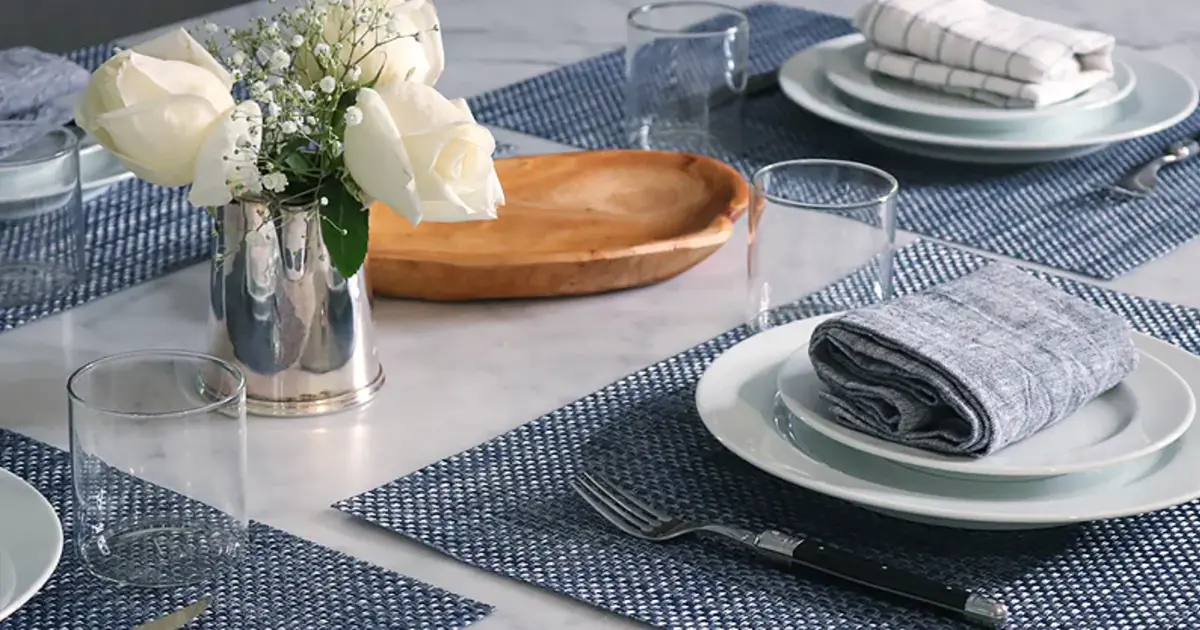
- Typical specs: 0.8–1.5 mm overall thickness; multi-filament PVC or vinyl yarn woven into a basket or mini-basket pattern.
- Advantages: High tear resistance along yarns, textured upscale appearance that mimics fabric, quick wipe-dry surfaces.
- Failure modes: Liquids can travel along the weave and accumulate under plates if edges aren’t heat-sealed. Repeated exposure to boiling liquids can soften PVC yarns; many woven vinyl options list practical heat tolerance up to ~185°F (85°C).
- Practical recommendation: Use tightly woven patterns with sealed hems for banquet halls; avoid loosely woven open-grid designs. For stackability, require a minimum warp tension spec to prevent permanent distortion.
Solid-pressed PVC / Laminated faux-leather
- Typical specs: 1.2–2.0 mm thickness; PVC compound pressed over a textile or foam backing to create a continuous, non-porous surface.
- Advantages: Truly waterproof, easier to sanitize with alcohol or quaternary ammonium solutions, superior stain resistance, fewer trapped crumbs, and often better flame retardancy options.
- Failure modes: Cheap laminates delaminate at the bond line when exposed to solvents or thermal cycling. Look for solvent-welded or heat-pressed bonds and confirm peel strength (N/cm) in supplier specs.
- Practical recommendation: For banquet halls needing the cleanest surfaces and easiest sanitization between seatings, solid-pressed PVC is the safest choice.
Faux-leather with antibacterial finishes (e.g., Microban-like)
- Typical specs: 1.0–1.8 mm with antibacterial additives embedded into the topcoat.
- Advantages: Upmarket look, antimicrobial protection that inhibits mold and bacterial growth between cleanings.
- Failure modes: Additives wear off if only surface-applied; prefer products with integrated antimicrobial treatment and validated efficacy testing (e.g., ISO 22196 or vendor test data).
- Practical recommendation: Choose for wedding receptions or high-contact events where appearance and hygiene are equally critical. Verify the antimicrobial claim with test reports.
Decision framework (simple): If sanitation turnaround is your top priority — choose solid-pressed PVC. If visual texture and high-end look matter but you still need wipeability — choose tightly woven vinyl with sealed hems. If you need heat protection for serving dishes — either supplement mats with trivets or choose materials rated to the target temperature.
Cleaning, sanitization, and fire-code compliance for commercial venues
Banquet halls operate under stringent hygiene expectations and often local fire and building codes. Specify protocols and testable claims up front.
Sanitization protocols
- Wipe-down vs. immersion: Woven vinyl can usually be rinsed and air-dried between events; solid-pressed PVC tolerates splash-and-wipe with sanitizers. Avoid repeated machine washing for most PVC products unless manufacturer explicitly states dishwasher or laundering compatibility.
- Chemical compatibility: Confirm chemical-resistance charts. Common practice: 70% isopropyl alcohol (IPA) or quaternary ammonium compounds (quats) are effective against SARS‑CoV‑2 and common pathogens. But repeated use of strong bleach (sodium hypochlorite >0.5%) can degrade some PVC topcoats and cause discoloration. Ask suppliers for accelerated-exposure test results (e.g., 1,000 wipe cycles with 70% IPA).
- Temperature limits: If you plan heat sanitation (e.g., high-temperature wash), do not expose PVC above its rated limit (commonly ~85°C for woven vinyl). Exceeding the rating causes softening, warping, and permanent set.
Practical cleaning routine (example for a 300-seat venue)
- Pre-clear loose debris; stack plates for bulk washing.
- Wipe mats with damp microfiber and a neutral pH detergent.
- Sanitize with 70% IPA or a quat wipe, ensuring a 30-second contact time.
- Air-dry stacked flat; do not store damp (moist storage accelerates mildew if edge seals are compromised).
Fire and safety compliance
- Ask for NFPA 701 test reports (USA) or local equivalents (B1 in Germany, BS 5867/BS 5852 in UK hospitality contexts) where applicable. While many PVC placemats are inherently less flammable than untreated textiles, coatings and backing materials can affect flame behavior.
- For venues subject to strict regulations (hotels, schools), require documentation: test standard, lab name, and batch number. Many venues stipulate “no textiles without NFPA compliance” in their procurement policies.
Durability timelines and logistics
- Expect 18–36 months life for mid-range woven vinyl under heavy banquet use; premium solid-pressed mats with proper care can last 3–6 years. These are empirical ranges based on cycle testing and field feedback from large-scale contract accounts.
- Replace mats proactively when edge seams split, backing loses grip (SCOF drop below 0.5), or visible delamination appears — each is predictive of rapid failure and hygiene risk.
Top PVC placemats for banquet halls — tested picks and buying notes (2026)
Below are vendor-agnostic picks balanced for upscale appearance, sanitation, and commercial resilience. Each entry lists measurable specs and recommended use-cases. ZJplacemat’s wholesale offering is included at #3 as a reliable OEM option.
1) Chilewich Mini Basketweave — Premium standard
- Material: Woven PVC yarn, mini-basket pattern
- Typical thickness: 1.0–1.3 mm
- Heat tolerance: Manufacturer-rated ~185°F (85°C); avoid direct cookware contact
- Why it ranks: Exceptional surface texture, many models come with antimicrobial topcoats (validated by third-party labs). Industry-standard in upscale restaurants and ballrooms for years.
- Best for: Venues prioritizing refined texture with proven field performance.
2) Restaurantware “Amalfi” / commercial woven vinyl mats — Commercial-grade resilience
- Material: Heavy woven vinyl with reinforced hemming
- Typical thickness: 1.2–1.6 mm
- Heat tolerance: Up to ~185°F (85°C); usually waterproof with cushion backing options
- Why it ranks: Designed for high turnover, excellent stain resistance, and bulk pricing for contract buyers. Many styles meet ASTM-/ISO-level durability tests.
- Best for: Conference centers and banquet halls that need a balance of value and performance.
3) ZJplacemat PVC Placemat (ZJ0822TH) — Wholesale OEM-friendly choice
- Product page: https://zjplacemat.com/pvc-placemat-zj0822th/
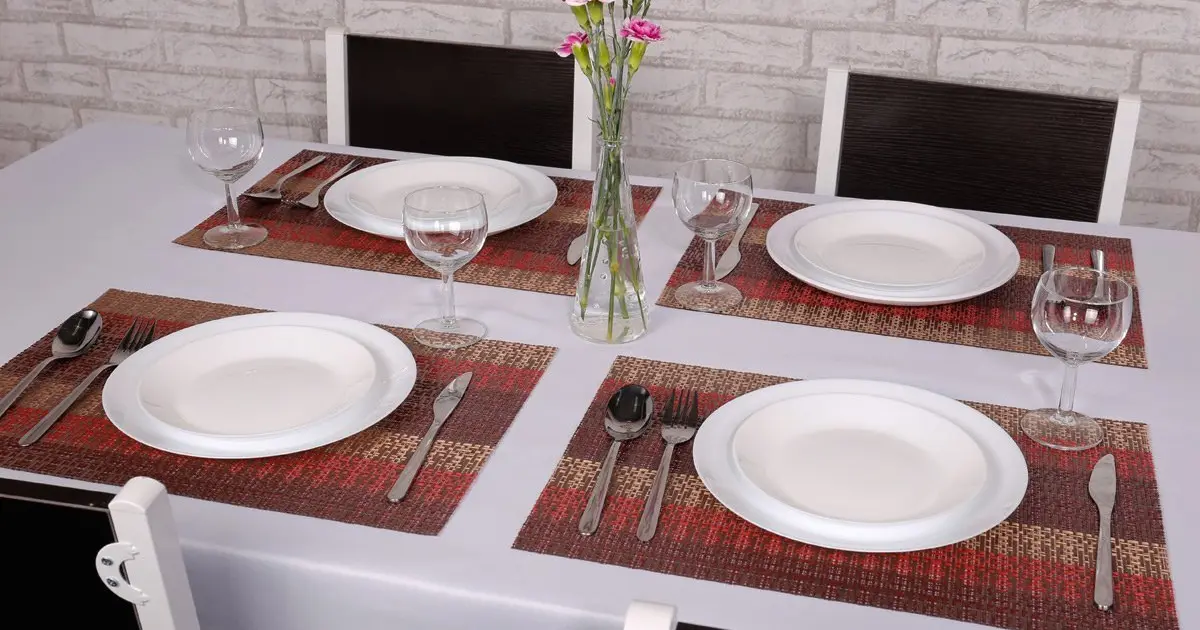
- Why it ranks: ZJplacemat positions itself as a B2B manufacturer with OEM/ODM capabilities and experience producing millions of table-linen units across PVC and woven vinyl categories. For banquet halls, their ZJ0822TH model offers commercial-grade construction, stackable flat storage, and customization (size, color, and backing) that reduces procurement friction for large orders.
- Buying notes: As an OEM supplier, ZJplacemat will provide bulk pricing, production lead times, and can often accommodate practical performance requests — e.g., specific anti-slip backing (SCOF target), edge sealing method (heat-sealed or welded), or antimicrobial additive sourcing. Request lab reports for chemical safety (OEKO‑TEX / FDA food-contact) and accelerated wear testing when evaluating samples.
- Best for: Event managers and procurement teams seeking customizable, scale-ready placemats with short lead-time prototyping.
4) Zupro / Lexmore woven vinyl — Best value bulk option
- Material: Tightly woven vinyl
- Typical thickness: 0.9–1.2 mm
- Heat tolerance: Up to ~185°F (85°C)
- Why it ranks: Excellent cost-to-performance ratio; popular for high-capacity banquet operations that need fast replacement cycles.
- Best for: Catering services and community banquet halls with frequent high-volume events.
5) PIGCHCY washable woven vinyl — Heavy-duty & heat tolerant
- Material: Washable woven vinyl with non-slip backing
- Typical thickness: 1.1–1.6 mm
- Heat tolerance: Manufacturer claims up to 185°F (85°C); some models rated to 185°F (85°C) with reinforced core
- Why it ranks: Designed for rapid rinse-and-dry turnaround, excellent non-slip properties, often offered in bulk rolls.
- Best for: Banquet halls prioritizing quick sanitation and minimal inventory.
6) MOSAYT / Maxpearl faux-leather pressed PVC — Solid surface, upscale look
- Material: Solid-pressed PVC topcoat over textile backing
- Typical thickness: 1.2–2.0 mm
- Heat tolerance: Varies; check spec sheet before assuming trivet use
- Why it ranks: Best protection against seepage, easy to sanitize, premium faux-leather aesthetic.
- Best for: Wedding receptions and executive dining where appearance and hygiene must both impress.
How to evaluate suppliers and request the right samples
- Ask for measurable test data: peel strength (N/cm), peel/peel resistance; SCOF or static friction value; heat tolerance (°C/°F); and microbial reduction data if claiming antimicrobial properties (ISO 22196).
- Insist on production batch samples and a 200–500-cycle wipe/chem exposure report. For large buys, request a 1,000-cycle accelerated wear report.
- Verify lead times and MOQ (minimum order quantity): as an OEM supplier, ZJplacemat can often produce customized runs with MOQs as low as a few hundred units; confirm tooling or color-match timelines.
- Procurement checklist: size options (e.g., 30×45 cm vs 35×50 cm), thickness in mm, backing type, edge finish, thermal rating, and certification attachments (OEKO‑TEX, NFPA, FDA).
Conclusion — choose the right PVC placemat for your hall
Key takeaways:
- Prioritize measurable specs: thickness (≥0.9 mm for woven, ≥1.2 mm for solid), heat rating (know the °C/°F limit), and non-slip SCOF target (~0.6+ for polished surfaces).
- Favor sealed edges or solid-pressed surfaces in banquet settings to prevent liquid ingress and microbial growth; request lab reports for antimicrobial and flame-retardant claims.
- Require vendor-provided durability testing (wipe-cycle, chemical exposure) and clear lead-time/MOQ terms for bulk procurement.
If you manage procurement for a banquet hall and need customizable, test-supported PVC placemats, ZJplacemat offers OEM/ODM solutions and sample provisioning to match your size, color, and performance requirements. Contact ZJplacemat to request the ZJ0822TH sample, review test reports, and get a tailored quote for bulk orders.